
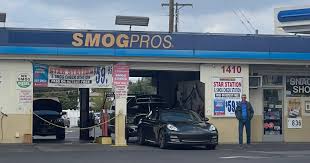
I was driving down Mira Mesa Boulevard last Tuesday when I saw the orange cones and the California Highway Patrol cruiser. My heart did that familiar little skip. Even with a clean car and current tags, there’s something about a roadside checkpoint that makes every driver in San Diego feel like they’ve done something wrong.
Thank you for reading this post, don't forget to subscribe!But as I got closer, I saw the “Voluntary Smog Survey” signs. This is the Roadside Emissions Survey Program, and in 2026, these teams are popping up more frequently in high-traffic areas like Kearny Mesa, Chula Vista, and the I-5 corridor. If you’ve never encountered one, it can feel like a trap. In reality, it’s one of the few times the state interacts with your car without trying to take your money.
What Actually Happens at a San Diego Roadside Survey?
First, let’s clear up the biggest myth: It is 100% voluntary. The CHP officer is there to manage traffic and safely direct cars into the survey lane, but they aren’t pulling you over for a ticket. If you’re in a rush to get to a Padres game or late for a meeting in Sorrento Valley, you can simply decline and drive away.
If you do choose to stop, the process takes about five to eight minutes. A Bureau of Automotive Repair (BAR) technician—usually someone with years of experience in the field—will perform a quick version of a smog check. They plug into your OBD-II port and sometimes use a tailpipe probe while the car idles.
Survey vs. Official Smog Check
| Feature | Roadside Survey | Official Smog Check |
| Requirement | Completely Voluntary | Mandatory for Registration |
| Cost | Free | $40 – $90 (Avg. San Diego) |
| Impact of Failure | None (No Citations) | Must Repair to Register |
| Record | Anonymous Data Only | Sent to DMV/BAR Database |
| Benefit | Free Diagnostic Report | Legal to Drive |
I always tell people that if you have the time, you should say yes. It’s like getting a free “pre-test.” They give you a printout of how your car is performing. If you’re a few months away from your actual renewal, this report is a “crystal ball” that tells you if you’ll need a smog check location or a mechanic soon.
Why the BAR is Targeting San Diego Right Now
You might wonder why they choose specific spots in San Diego. The BAR doesn’t pick locations at random; they use ZIP code data to find areas with a high density of “directed” vehicles—cars that are statistically more likely to fail.
In 2026, San Diego is a major focus because of our unique mix of high-mileage commuters and coastal “corrosion” issues. By testing cars in the “wild,” the state can see how real-world driving—like idling in traffic on the 805—affects emissions compared to the controlled environment of a smog station.
2026 Hotspots for Roadside Surveys
-
Mira Mesa Blvd: Heavy commuter traffic and mixed vehicle ages.
-
National City: High density of older, “Pre-OBD” vehicles.
-
Kearny Mesa: Central hub for San Diego’s automotive industry.
-
Sports Arena Blvd: High volume of coastal-driven vehicles.
I’ve noticed these teams often set up on Tuesday or Wednesday mornings. They want the “average” commuter, not the weekend cruisers or the Sunday drivers.
The “High Emitter” Screening: Remote Sensing Technology
While the roadside surveys are voluntary, there is a second type of “hidden” monitoring that became much more active in 2026: Remote Sensing Devices (RSD). If you’ve driven under a bridge and seen a small green laser light flickering across the road, you might have just been screened. These devices can measure the chemical composition of your exhaust as you drive past at 60 mph. Unlike the survey teams, you don’t even have to stop.
What Happens if You’re Flagged?
If a remote sensor catches your car emitting high levels of CO or HC multiple times, the BAR might send you a “Notice to Submit to Testing.” This isn’t a fine yet, but it’s a mandate. You’ll be required to visit a smog check discount station or a STAR station within 30 days to prove your car isn’t a “Gross Polluter.”
I had a client who received one of these notices after his commute through the Mid-City area. He was furious, thinking the “laser” was wrong. It turned out he had a cracked exhaust manifold that was leaking only when the engine was under heavy load—something the standard idle test at a shop might have missed.
Navigating the “Ready” Monitor Trap in 2026
One thing the roadside survey teams are seeing a lot of in 2026 is the “Incomplete Monitor” issue. As we discussed in earlier guides, the 2026 standards for OBD readiness are the strictest they have ever been.
Many drivers think that if the “Check Engine” light is off, they are safe. But if you’ve recently had a dead battery—common in the San Diego heat—your car might be in a “Not Ready” state for weeks. The survey team can tell you exactly which monitors are lagging.
The Top 3 “Lagging” Monitors in San Diego
-
Evaporative System (EVAP): Often fails to set if your gas tank is always too full or too empty.
-
Catalytic Converter: Needs specific “steady-state” driving on the freeway to trigger.
-
Oxygen Sensor: Often reset by salt air corrosion in coastal neighborhoods.
If the survey tech tells you your “Cat Monitor” isn’t ready, take it as a sign to go for a long drive toward Julian or Pine Valley. You need those monitors set before you pay for an official smog check.
The Bonus: Recall Alerts and Safety Checks
The best part of the voluntary survey is the “Safety Bonus.” Because these technicians have access to the full BAR database, they will often run your VIN for any open safety recalls.
Last month, a friend of mine stopped for a survey in Escondido. Not only did his car pass the emissions test, but the tech alerted him to a “Park Outside” fire recall for his ABS module that he had never received in the mail. That five-minute stop might have saved his house.
Summary Checklist for a Roadside Encounter
-
Don’t Panic: It’s a survey, not a traffic stop.
-
Be Courteous: The techs are just doing a job to help clean our air.
-
Keep the Report: The printout is a valuable health check for your car.
-
Use the Data: If they point out a small leak or a pending code, use a smog check discount to get it fixed early.
San Diego is one of the most beautiful places to drive in the world, from the Coronado Bridge to the Sunrise Highway. These programs, while they can feel intrusive, are the reason our “June Gloom” is just fog and not a thick layer of smog. If you see the cones and the orange vests, take five minutes to participate. You might just find out your car is in better (or worse) shape than you thought—and it won’t cost you a dime to find out.
